Strategic sourcing for the packaging of cosmetics directly impacts your time-to-market and profit margins. A standard 10-14 week development cycle often causes brands to miss key sales windows, while failures in transit testing can lead to costly product loss and damage claims.
This report breaks down the key trade-offs in your supply chain, from material selection to lead time. We analyze how factors like a 30-day rapid prototyping cycle and low MOQ availability can accelerate a launch, while engineering standards for zero-leakage seals protect your investment.
The 4 Functions of Cosmetic Packaging: Protection to Promotion
Cosmetic packaging has four main jobs: protecting the product, identifying the brand, making it convenient to use, and promoting it with appealing design to influence purchase decisions.
Core Roles: From Product Integrity to Brand Identity
All cosmetic packaging must perform four basic functions to be effective. These roles cover everything from preventing contamination during shipping to catching a customer’s eye on a crowded shelf.
- Protection: Shields the formula from environmental damage. This includes light, temperature changes, and microorganisms, especially during transport and storage.
- Identification: Communicates what the product is. The packaging must clearly state the brand, product type, and other key information so customers can find and recognize it.
- Convenience: Makes the product easy to handle. Good packaging design ensures the product is simple to store, transport, and dispense for the end user.
- Promotion: Acts as a marketing tool. The graphic design, color, shape, and texture all work together to attract attention and build a brand identity.
Engineered for Zero Leakage and Transit Safety
Product protection isn’t just a concept; it’s an engineering standard. We build our packaging to eliminate common points of failure, ensuring products arrive intact and stable. This requires specific materials and rigorous testing.
- Guaranteed Seal Integrity: Our bottles and pumps pass strict vacuum negative pressure and torque testing. This process ensures a 100% fit between the components for zero leakage.
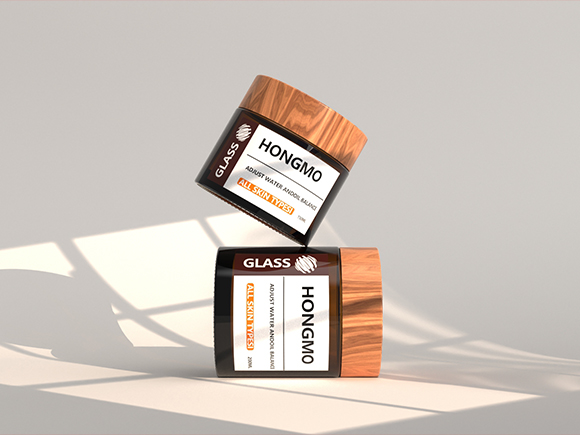
- UV Protection for Sensitive Formulas: We offer amber and dark glass options specifically designed to protect light-sensitive ingredients from UV damage, preserving formula integrity.
- Transit-Ready Packaging: We use export-grade corrugated cartons and pallets for shipping. All our packaging solutions have passed the Drop Test to minimize breakage during transit.
Material Wars: Glass vs. PET Plastic vs. Aluminum
PET plastic has the lowest production impact, while aluminum leads in recycling. Yet glass remains the standard for luxury brands due to its superior feel and product protection.
Comparing Environmental Footprints and Recyclability
PET plastic consistently shows a lower environmental footprint during the manufacturing phase. It requires significantly less energy and water to produce compared to melting glass or processing aluminum, resulting in lower greenhouse gas emissions before it even gets to a filling line.
Aluminum’s main strength is its performance in a circular economy. It has a high recycling rate and excels in closed-loop systems, where an old can efficiently becomes a new can. The material itself can be recycled repeatedly with minimal loss of quality, making it a strong choice for brands focused on post-consumer life.
Glass carries a heavier environmental cost during production due to the high heat required. But it is infinitely recyclable without any degradation in purity or quality. For many consumers, its inert nature also makes it the preferred choice to avoid direct contact between their product and any type of plastic.
Why High Flint Glass is the Standard for Premium Cosmetics
High-end cosmetic brands don’t choose glass by accident. They specifically select High Flint glass, which uses premium raw materials like high-purity quartz sand. This process yields exceptional transparency and a crystal-like quality that immediately signals luxury to the consumer before they even open the product.
The material is also chemically inert, a critical factor for protecting the integrity of complex and sensitive formulas. Serums, perfumes, and high-concentration creams can react with other materials, but glass ensures the formula remains stable and pure from the factory to the final use.
Finally, precision manufacturing creates a superior seal. We conduct rigorous vacuum and torque testing to guarantee a perfect fit between the bottle neck and the pump or cap. This engineering eliminates leakage, protecting high-value products during cross-border shipping and handling.
Launch Faster with Custom Glass Packaging
2026 Trend Watch: Minimalism & “Refill Revolution”
In 2026, cosmetic packaging is defined by minimalism and refillable systems. Brands are adopting durable outer containers with replaceable inner cartridges to meet sustainability demands without sacrificing luxury.
The Rise of Refillable Systems in Mainstream Beauty
The refill model is no longer a niche concept for luxury brands. Consumer demand for environmentally responsible products has pushed it into mainstream skincare and personal care. The system is straightforward: customers buy a durable, premium outer package once and then purchase lightweight, less expensive inner cartridges to replace the product when it runs out.
This approach creates a powerful cycle of customer loyalty. Instead of a one-off purchase, brands build a long-term relationship, generating recurring revenue from refill sales. It works because it gives consumers a tangible way to reduce waste while still enjoying a high-end product experience with a substantial glass or metal container.
High Flint Glass: The Ideal Material for Premium Refills
For a refill program to succeed, the permanent outer container must feel valuable enough to keep. This is where high flint glass excels. It delivers exceptional transparency and a crystal-like texture, creating the substantial, luxurious shell that justifies the entire system. Its clarity showcases the product inside, reinforcing a clean, minimalist aesthetic.
The engineering is just as important as the look. A refill system that leaks is a failure. High flint glass bottles can be manufactured with precision neck engineering and minimal tolerance control. This ensures a perfect, airtight seal with pumps and refill cartridges, passing rigorous vacuum and torque tests to guarantee zero leakage.
The Unboxing Experience: Secondary Packaging Essentials
Secondary packaging is the outer box protecting the primary container. It’s a key branding tool, provides essential product information, and is crucial for the unboxing experience.
Core Functions of Secondary Packaging
The outer box does more than just hold the product. It plays several critical roles from the moment it leaves the warehouse to when the customer opens it.
- Product Protection: Its primary job is to guard the inner glass container from impacts, vibrations, and damage during shipping and handling. The product needs to arrive in perfect condition.
- Brand Storytelling: This is the first physical touchpoint a customer has with the brand. It acts as a canvas for logos, colors, and graphics that communicate your brand’s identity and values.
- Information Delivery: The exterior provides essential space for ingredients, usage instructions, regulatory details, and marketing messages like “vegan” or “sustainably sourced.”
Ensuring Integrity with Drop-Tested Transit Packaging
A great unboxing experience starts with a product that arrives intact. We validate our packaging solutions through rigorous Drop Tests to minimize breakage during cross-border shipping. Our standard approach uses a combination of durable corrugated cartons and export-grade pallets to secure products for transit, ensuring they can withstand the stresses of global logistics.
Supply Chain Strategy: Balancing Lead Time & Cost
A typical 10-14 week development cycle forces a trade-off between cost and speed. Strategic partners accelerate this with rapid prototyping and available in-stock inventory.
| Timeline Factor | Standard Industry Pace | Hongmo’s Accelerated Pace |
|---|---|---|
| New Product Prototyping | 60–90+ Days | 30 Days (Mold to Sample) |
| Urgent / Small Batch Orders | Often Not Feasible | 3–7 Days (from In-Stock Inventory) |
| Using Existing Designs | Variable / Depends on Supplier | Immediate (20+ Mature Bottle Series) |
Key Trade-Offs in the Production Timeline
The standard cosmetic packaging supply chain runs on a 10–14 week cycle from the initial concept to the start of mass production. This timeline creates a constant tension between launching quickly and managing costs. Rushing critical stages like stability testing or mold refinement often leads to bigger, more expensive problems later.
Smart brands build a 10–15% contingency buffer into their budgets to handle unexpected delays, material changes, or quality control issues. You can gain leverage on pricing and lead times by consolidating smaller orders into larger, less frequent production runs. Providing suppliers with annual forecasts also allows them to plan capacity, which can secure better terms and a more reliable partnership.
Accelerating Time-to-Market with Prototyping & Inventory
Working with an integrated manufacturing partner can drastically shorten development cycles. Instead of navigating the standard timeline, brands can use existing infrastructure and processes to get to market faster. We focus on three key areas to accelerate launches.
- Rapid Prototyping: We deliver physical samples from new, custom molds in just 30 days. This is often 15 to 30 days faster than the industry average, helping you finalize your design and start production while competitors are still waiting for samples.
- In-Stock Inventory: For startups, market tests, or urgent replenishment, we offer in-stock packaging with a lead time of only 3-7 days. This eliminates production wait times for smaller, critical orders.
- Mature Mold Library: We maintain over 20 mature bottle series. This allows brands to select a proven, high-quality design and bypass the mold development stage entirely, saving both time and significant upfront investment.
Regulatory Compliance: FDA, EU, and Labeling Laws
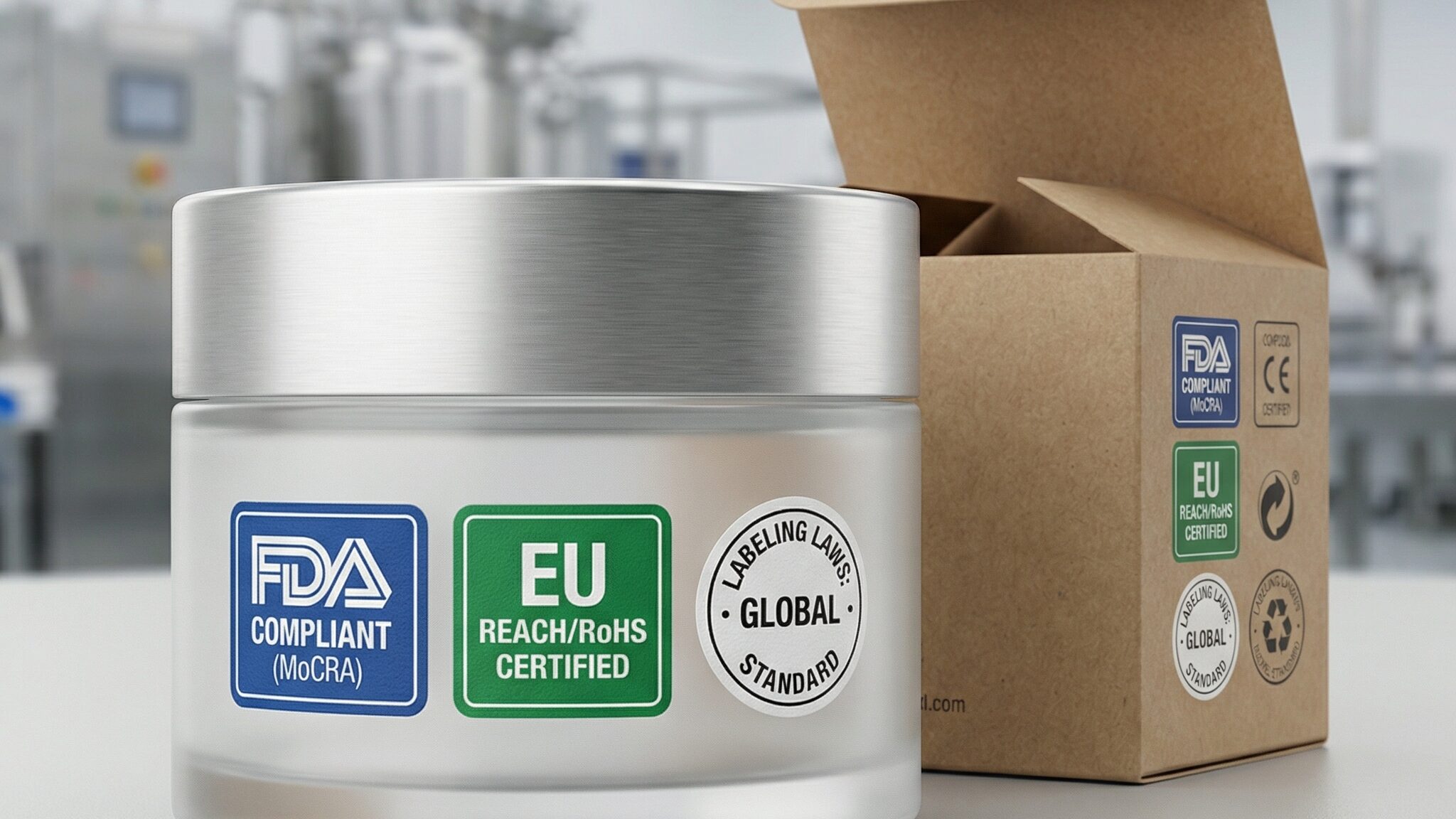
Packaging compliance means meeting strict FDA (MoCRA) and EU (REACH, RoHS) rules for material safety and labeling. It’s not optional for global brands.
Key Frameworks for International Compliance
Navigating the global cosmetics market means you can’t just create a single package and ship it everywhere. Each jurisdiction has its own set of rules. In the U.S., for example, manufacturers must now follow the FDA’s Modernized Cosmetics Regulation Act (MoCRA), which introduces new requirements for facility registration and product listing.
Because rules on restricted ingredients and labeling change constantly, serious brands use regulatory databases. These systems track requirements across dozens of countries, ensuring that a product sold in the EU has the correct information displayed differently than one sold in Asia.
Meeting EU & US Standards with REACH and RoHS
Getting your product into the most valuable markets in Europe and the United States requires proving your packaging materials are safe. This isn’t just a suggestion; it’s a hard requirement backed by specific regulations like REACH and RoHS.
All Hongmo Glass products are fully compliant with both REACH and RoHS. This certification confirms our materials are free of restricted heavy metals and harmful volatile substances. For our clients, this means the packaging is pre-cleared and safe for direct entry into the most demanding export markets, eliminating a major potential bottleneck for your launch.
Why Hongmo Glass is Your Strategic Packaging Partner
Hongmo Glass provides a one-stop solution from design to final assembly, featuring an industry-leading 30-day prototyping cycle that significantly accelerates your product launch timelines.
Integrated Solutions from Design to Delivery
Working with multiple vendors creates complexity and risk. We simplify your supply chain by managing the entire packaging lifecycle under one roof. This integrated approach ensures consistency from the initial concept to the finished product on the shelf.
Our ‘one-stop’ service covers every critical stage:
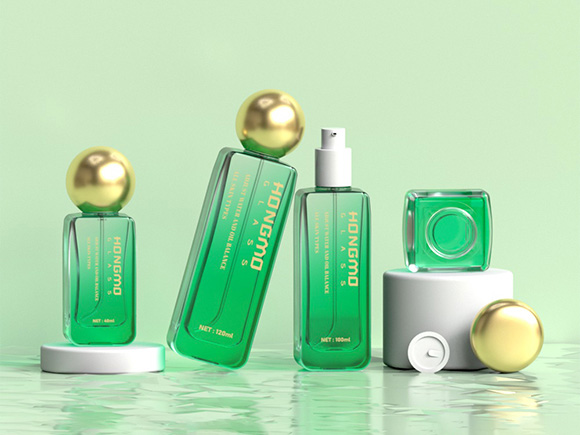
- Design & Moulding: We help develop your unique brand identity, with access to over 20 mature cosmetic bottle series or by creating exclusive custom shapes.
- Surface Treatments: We offer a full range of finishes, including screen printing, hot stamping, spray coating, frosting, and electroplating.
- Final Assembly: We handle the final steps, ensuring your components are assembled correctly and ready for filling.
Accelerated Time-to-Market with Rapid Prototyping
Speed is a competitive advantage. Our process delivers new product samples from mold opening in just 30 days. This cycle is 15 to 30 days faster than the industry average, giving you a critical edge.
This rapid development capability allows your brand to secure crucial launch windows and respond quickly to fast-moving market trends. You can test new concepts, iterate faster, and get your product in front of customers before competitors do.
Final Thoughts
Generic packaging offers a lower unit price, but exposes you to the real costs of leakage and transit breakage. Our vacuum-tested seals and drop-tested cartons are an engineering standard, not an option. This protects your margins from product returns and safeguards your brand’s reputation.
The next step is to verify our quality firsthand. We can prepare samples from our in-stock inventory or start the 30-day prototyping process for your custom design. Contact our team to get your project moving.
Frequently Asked Questions
What are the legal requirements for cosmetic packaging?
In the United States, cosmetic packaging is primarily regulated by the FDA under the FD&C Act and FP&L Act, which mandate accurate labeling for ingredients, net quantity, and safety warnings. International standards also apply, such as the European Union’s focus on safety assessments and recyclable materials, and ISO 22715:2006, which provides global guidelines for packaging and labeling.
How does packaging affect product shelf life?
Packaging is a primary factor in determining a product’s shelf life. It protects formulations from environmental factors like light, air, and contaminants that cause degradation. Materials like amber glass offer UV protection for light-sensitive ingredients, while airless pump systems prevent oxidation. Secure seals are also critical to prevent moisture and bacteria from compromising the product.
What is the most sustainable cosmetic packaging?
Glass and aluminum are widely considered the most sustainable materials because they can be recycled infinitely without losing quality. Other excellent eco-friendly options include Post-Consumer Recycled (PCR) plastic, which supports a circular economy, and renewable materials like bamboo. The ideal choice depends on the specific product, but these options help reduce waste and environmental impact.
How can brands reduce packaging costs without losing quality?
Brands can lower packaging costs by making strategic choices in materials, design, and operations. This includes selecting cost-effective yet durable materials like PET, simplifying designs to use standard shapes instead of custom molds, and optimizing material thickness. Partnering with a manufacturer for bulk production and reusing existing molds also significantly reduces expenses without compromising product protection or brand aesthetic.
What is the difference between primary and secondary packaging?
Primary packaging is the container in direct contact with the cosmetic product, like a serum bottle or a cream jar. Its main purpose is to protect and preserve the formula. Secondary packaging is the outer layer, such as a cardboard box, that holds the primary container. It provides additional protection during shipping and serves as a key marketing tool on retail shelves.
Are there eco-friendly packaging solutions available?
Yes, the industry offers many eco-friendly solutions. These include fully recyclable materials like glass and aluminum, packaging made from Post-Consumer Recycled (PCR) plastics, and biodegradable options such as bamboo or paper. Refillable systems are also becoming popular, allowing consumers to reuse the primary container multiple times to drastically reduce single-use waste.