Securing glass dropper bottles wholesale often involves significant risks in quality control and supply chain reliability. Subpar sourcing impacts product integrity and directly erodes margins.
This guide details critical evaluation factors like MOQ, délais de livraison, and specific glass quality standards. We analyze supplier operational reliability and quality control to ensure scalable procurement.
Why Buy Glass Dropper Bottles Wholesale?
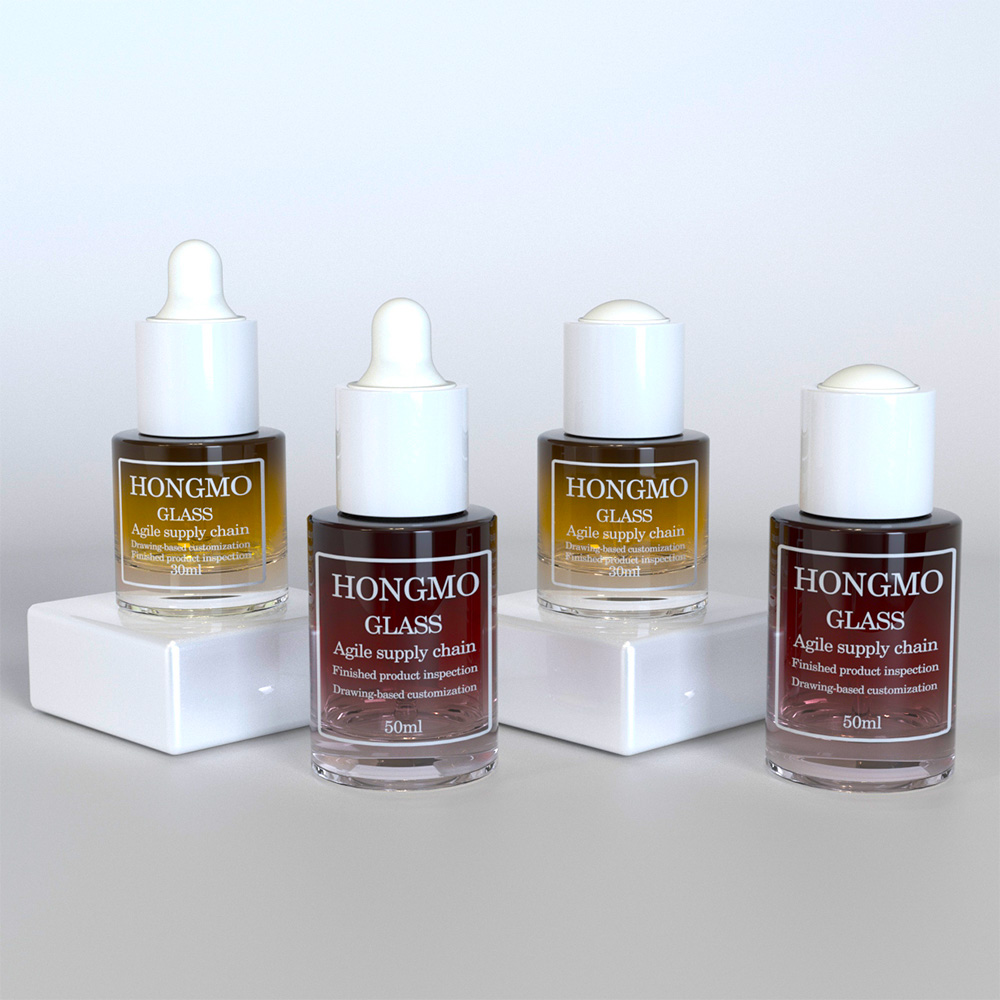
Wholesale glass dropper bottles mean lower costs, consistent quality, stronger brand control, and reliable supply for businesses.
- Lower per-unit cost: Wholesale and bulk programs significantly reduce bottle costs compared to small-quantity purchasing.
- Economies of scale: Fixed costs like shipping get spread across more units, improving margins.
- Improved product margin: Lower packaging costs directly increase gross margin. Wholesale suppliers offer tiered pricing with volume discounts.
- Reduced shipping cost per unit: Consolidated bulk shipments lower freight costs per bottle.
- Less risk of supply fragmentation: Wholesale purchasing consolidates supply, reducing variability in quality and dimensions from multiple small vendors.
Standard Wholesale Bottle Specifications
Standard wholesale bottle specs cover common capacities, industry-standard neck finishes, and material types. Buyers prioritize compatibility checks, couleur, and size for proper fit and product integrity.
- Common capacities range from 5 ml to 100 ml, with frequent sizes being 10, 15, 30, 50, et 100 ml.
- Industry-standard neck finish is DIN18, ensuring broad compatibility with closures and droppers.
- Bottle shapes commonly include round and square options, influencing branding and filling lines.
- Glass colors available are typically clear, ambre, et bleu cobalt; amber glass protects light-sensitive contents.
- Glass materials include soda-lime for standard use and borosilicate for enhanced heat and chemical resistance.
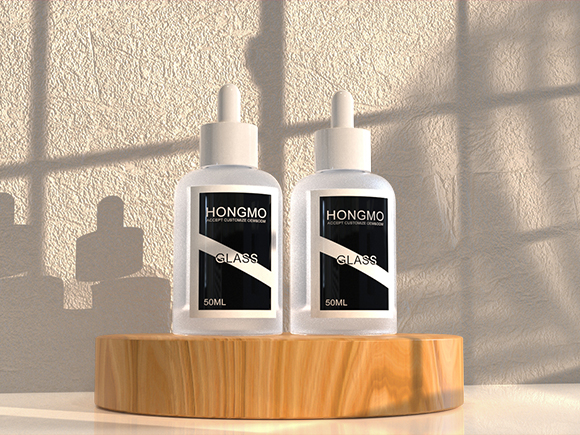
- Closure and dropper assemblies vary, often featuring rubber bulb droppers or plastic pipettes for accurate dispensing.
Elevate Your Brand with Premium Glass Packaging
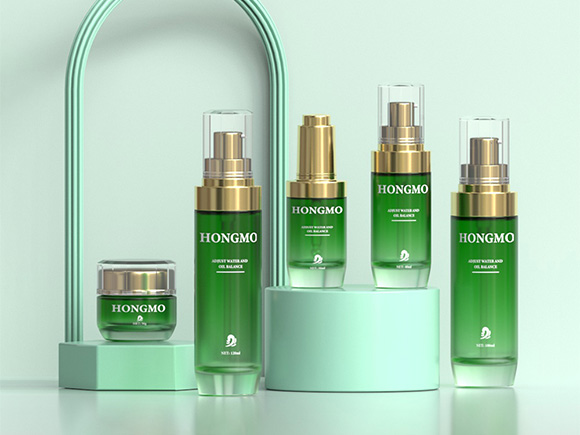
Bulk vs Custom Glass Dropper Bottles
Bulk and custom glass dropper bottles balance speed and cost efficiency against brand differentiation and precise functional control.
Fundamental Distinctions and Operational Factors
Bulk, or stock, glass dropper bottles are pre-designed and held in inventory by suppliers. They come in standard capacities, neck finishes, and colors like amber, clair, or cobalt. Businesses buy these in case or pallet quantities, often with low to moderate minimum order quantities (MOQ), sometimes as low as hundreds of units from distributors, or around 3,000 units factory-direct. This approach gives you short lead times, often from immediate release to a few days for processing and shipping if the product is in stock domestically. Bulk options leverage existing tooling and mass production, which means multiple suppliers carry similar formats, increasing supply redundancy.
Custom glass dropper bottles have their shape, dimensions, couleur, glass formulation, neck, or decoration engineered specifically for a brand. These often require dedicated molds and artwork. You see unique silhouettes, brand-specific colors, or custom neck interfaces for specialized droppers. The lead time is significantly longer, involving concept and engineering drawings, développement de moisissures (around 20 days for samples), sampling and approval, then mass production (around 35 jours). From design sign-off to usable stock, this typically takes two to three months or more, plus shipping.
Strategic Choices for Branding and Supply Chain
For supply chain management, bulk options provide inventory flexibility. You can adjust order volumes to demand, source from multiple vendors, and switch colors or sizes with minimal disruption. This reduces risk when testing new markets or operating with tight cash flow. Supplier selection focuses on consistent quality, reliable stock levels, and clear MOQs.
For custom bottles, long-term supply commitments are common, involving ongoing production agreements and minimum annual volumes. This requires more sophisticated demand forecasting due to longer lead times and higher costs for design changes. Change control is critical; any alteration in glass composition or dimensions needs careful management to avoid requalification costs or compatibility issues.
Here are some practical actions for wholesale buyers:
- Define functional requirements: volume, glass type, compte-gouttes, light protection (amber vs. clair), and regulatory needs.
- Evaluate your realistic volume and cash-flow. If volumes are small, use stock bottles. For high, stable volumes, model custom costs.
- Align your branding strategy. For early-stage brands, use stock bottles with premium labels and custom boxes. Established brands with clear identity should consider custom bottle families.
How to Evaluate a Glass Dropper Bottle Supplier
Selecting a fournisseur de flacon compte-gouttes en verre means looking beyond price. You need to scrutinize quality, operational reliability, and their ability to support your growth. The right partner prevents costly issues down the line.
Assessing Glass Bottle Specifications and Quality Controls
Before you commit, dig into the bottle itself. The glass quality, dimensional accuracy, and the supplier’s quality control processes are critical. This directly impacts product integrity and your filling line’s efficiency.
Glass Quality and Material Specifications
- Most cosmetic and oil dropper bottles use Type III soda-lime glass. This glass balances cost with chemical resistance for non-injectable products.
- For highly sensitive or pharmaceutical products, check if Type II (treated) or Type I borosilicate glass is available. Borosilicate is more heat-resistant and less prone to chemical leaching.
- Inspect the surface quality for bubbles, fissures, pierres, or deformities. These can cause stress points and breakage. Request their AQL (Acceptable Quality Limit) criteria for cosmetic defects.
Product Range and Customization Options
A strong supplier offers both standard options and custom solutions. This helps you maintain consistent branding as you grow.
- For unique branding, assess their custom mold design capabilities. Do they offer 3D drawings, prototypes, and transparent MOQs for custom designs? Understand the lead time for mold development.
- Ensure they can provide an integrated system: glass bottle, dropper closure (capuchon, bulb, pipette), and optional child-resistant or tamper-evident features. This simplifies quality control.
Quality Management and Certifications
Quality systems set reliable suppliers apart. They show a commitment to consistent, traceable production.
- Check for ISO 9001 certification, conception de revêtement, fabrication, and decoration. This ensures batch-to-batch consistency and documented corrective actions.
- For pharmaceuticals, confirm cGMP compliance and knowledge of USP/EP standards for glass containers.
- Verify their incoming and outgoing inspection processes. How do they check for glass defects and dimensional accuracy? Request COA (Certificate of Analysis) and COC (Certificate of Conformance) options per batch.
- Suppliers should perform leakage and functional testing, including inverted storage, vibration tests, and torque tests for closures. They should also perform drop tests for break resistance.
- Ask about traceability. Bottles should have embossing or coding by cavity, batch, and date. This allows tracking in case of complaints or recalls.
Evaluating Supplier Operations and Partnership Dynamics
A supplier is more than just a vendor; they are a partner. Their operational capabilities and how they handle the relationship impact your long-term success.
MOQ, Pricing Structure, and Total Cost
Focus on the total cost to your shelf, not just the unit price. MOQ, freight, and hidden costs add up.
- Suppliers set MOQs (Minimum Order Quantities) by size, couleur, and decoration. Standard stock bottles often have lower MOQs (around 3,000 units factory-direct), while custom molds can require 50,000 units or more.
- Unit pricing depends on glass weight, couleur, decoration complexity, and the closure system. Compare the all-in packaging system price (bouteille + compte-gouttes + décoration).
- Glass is heavy and fragile, making freight a major cost driver. Evaluate palletization, carton sizes, dividers for breakage reduction, and shipping terms (GOUSSET, CIF, DDP).
- Bulk purchasing reduces unit and shipping costs. Balance this with your warehouse capacity and inventory carrying costs.
- Account for hidden costs like high reject rates, line stoppages from inconsistent dimensions, or leaking droppers. A slightly higher unit price for better quality often saves money in the long run.
Communication, Service, and Technical Support
Glass dropper bottles interact closely with your formulations and filling equipment. Good technical support is non-negotiable.
- Evaluate their responsiveness to RFQs and technical questions. Are their answers clear and complete (data sheets, drawings, test reports)? Do they offer local-language support?
- Good suppliers offer technical guidance on bottle volume vs. product viscosity, optimal bottle sizes (5–30 ml for serums, 50–100 ml for toners), and glass vs. plastic droppers. They should understand interaction between glass and formulation components.
- Ensure they provide sampling and testing support, including free or low-cost samples for line trials and prototype runs for custom-decorated items. They should support line trials and dropper dose validation.
- Evaluate their after-sales service. What are their RMA and claim processes? How do they investigate complaints and offer replacements or credits?
Quality Control Standards Before Mass Production
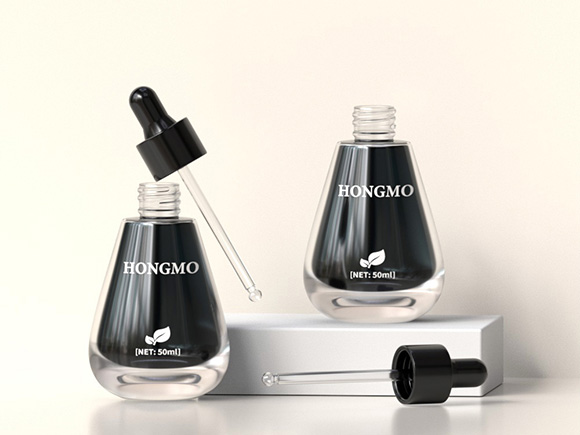
Before mass production, we rigorously verify glass integrity, dimensional accuracy, dropper fit, leak resistance, and batch consistency. This ensures every glass dropper bottle meets our stringent quality standards from the start.
Quality control before mass production for glass dropper bottles means we verify every critical detail. This includes glass integrity, dimensional accuracy, dropper fit, leak resistance, and batch consistency. We do this before full-scale runs begin. We use strict testing and hand inspection to prevent defective bottles from ever reaching our customers.
Core Pre-Production Inspection Categories
Before mass production, we focus on several key areas. We check raw materials, look for visual flaws, and test sealing performance. We also verify dimensions and dosage accuracy. Our goal is to ensure batch consistency from the start.
| Control Area | What We Check | Why It Matters |
|---|---|---|
| Glass quality | Cracks, puces, bulles, contamination, finish defects | Prevents breakage and rejects unsafe bottles. |
| Compatibilité des fermetures | Compte-gouttes, bulb, pipette, cap fit | Ensures proper sealing and use. |
| Leak testing | Bottle-closure seal integrity | Protects product during storage and shipping. |
| Dispensing performance | Dose consistency, calibration accuracy | Important for controlled application. |
| Dimensional accuracy | Hauteur, diamètre, finition du manche, capacité | Ensures packaging line compatibility. |
| Batch consistency | Uniformity across samples and cartons | Supports wholesale repeatability and scaling. |
Implementing and Sustaining Quality Before Mass Production
To make sure we consistently deliver high-quality glass dropper bottles, we take a proactive approach before full production starts. We typically approve a pilot run or sample lot. This confirms everything works as planned before we commit to large-volume manufacturing.
- We require 100% visual screening for critical defects on samples and pre-production lots when possible.
- We perform seal and leak validation on representative samples from each batch.
- We confirm dropper dosage consistency for product lines that rely on precise application.
- Mass production does not begin until the supplier meets all agreed inspection criteria and defect thresholds.
Suppliers emphasize several controls. This includes multiple hand checks before shipment and strict testing for cracks, fuites, and calibration accuracy. Strong quality assurance systems maintain consistent output at scale.
Custom Decoration Options for Brand Packaging
Brands customize glass bottles, fermetures, and secondary packaging through colors, finitions, impression, and structural changes to build identity and stand out.
Decoration Techniques Across Packaging Elements
- Coloration and surface finishes for glass bottles include colored glass, givré, revêtement par pulvérisation, et galvanoplastie.
- Direct printing and graphics on glass can be done using silk screen, pad printing, marquage à chaud, or UV digital printing.
- Structural customization involves creating custom shapes or embossing directly into the glass mold.
- Customize droppers, casquettes, and closures through material choice, color matching, traitements de surfaces, specific pipettes, or safety features.
- Diverse label and wrap options cover paper, film, specialty materials, and various print finishes.
- Secondary packaging solutions include custom boxes, specialized materials, and premium printing and finishing.
- Integrated brand system design ensures visual consistency and adds unique tactile elements across all packaging components.
Navigating Decoration Strategy and Production Realities
- Understand Minimum Order Quantities (MOQ) and cost drivers for each decoration method.
- Manage lead times and the development process effectively for custom glass and decorative applications.
- Ensure chemical compatibility of decoration materials with your product and adhere to all regulatory standards.
- Apply decoration strategically to position your brand for premiumization, durabilité, or market differentiation.
Cost Factors That Affect Wholesale Pricing
Wholesale glass dropper bottle pricing depends on materials, fabrication, volume, et personnalisation. Standard designs and large orders cut costs; custom molds and decoration raise them.
Product-Specific Manufacturing and Material Influences
Raw materials are the starting point for glass bottle costs. This includes silica sand, carbonate de sodium, limestone, and other additives. Dropper components like rubber bulbs and caps also add to the unit cost, with higher-grade glass and specialized formulations increasing it further due to different processing needs.
Glass manufacturing is energy-intensive. Fuel and electricity price increases directly impact wholesale bottle prices. This is especially true for glass dropper bottles, which already cost more than many plastic alternatives.
Decoration and printing add to the wholesale price. Options like screen printing, étiquetage, spraying, and UV printing increase the final cost. Custom branding adds not only decoration costs but also setup and run-time inefficiencies compared to undecorated stock bottles.
Custom molds and tooling are major upfront costs for unique glass dropper bottle shapes. This expense is particularly impactful for smaller buyers who cannot order enough volume to spread the cost efficiently across many units.
External Market and Supply Chain Determinants
Order quantity and Minimum Order Quantity (MOQ) heavily influence price. Larger orders typically reduce the per-unit cost because fixed expenses spread across more bottles. This creates a pricing advantage for high-volume buyers, but it can be a cash-flow burden for smaller buyers stuck with excess inventory.
Logistics and freight are significant cost factors. Glass is heavy and fragile, leading to higher packaging, breakage protection, and freight expenses. Customs duties, tariffs, and international shipping can significantly alter the landed cost of wholesale dropper bottles, especially for imported orders.
Market conditions also shift wholesale pricing. Supply and demand, competition, and regional differences all play a part. When capacity is tight, prices go up. When factories have excess capacity, buyers might secure better terms through larger or repeat orders.
Foire aux questions
What is the standard MOQ for glass dropper bottles?
The standard Minimum Order Quantity (MOQ) for glass dropper bottles in wholesale typically ranges from no formal MOQ for stock items up to 3,000–50,000 units. This depends on whether bottles are in-stock standard designs or fully customized projects.
How much do wholesale glass dropper bottles cost?
Wholesale glass dropper bottles commonly cost à propos $1.00 à $3.00 per bottle for standard small-to-mid-size packaging. Prices vary a lot based on specs and order volume.
Pensées finales
Choosing the right wholesale glass dropper bottles means safeguarding your product’s integrity and elevating your brand’s image. While unverified options might offer a lower initial price, investing in a vetted supplier ensures consistent quality, prevents costly defects, and protects your reputation from critical issues like leaks or incompatible fittings.
We encourage you to request samples to rigorously test glass quality, dropper compatibility, and overall fit for your specific formulations. Connect with our team to explore tailored OEM specifications and secure a reliable partnership that scales with your growth.